Truth be told: this season is hard, for many reasons:
- Here in the Northern hemisphere it’s hard to keep our spirits up in the absence of much daylight, warmth, and sunlight.
- Then there are all of the expectations that this season places upon us, to be generous, to purchase gifts for loved ones, and to be jolly.
- The longer we live, the more memories we have of the past, and especially the memory of loved ones: our parents and grandparents, our spouses, and siblings, and best friends who have died.
- The more news we read, the easier it is to become overwhelmed with unrest and anxiety, about the state of the country and of the world, and of our planet.
For those of us who are in the midst of experiencing grief, loss, death, endings, in our personal lives, it can feel as if the sun and the moon have fallen from the sky… the world is forever changed… It is harder still, if we believe that we are alone.
The truth is, that we are not alone in our struggles. All of us share these very human experiences at different times in our lives. All of hunger for a place where we can feel truly at home with ourselves and with others, in the presence of Love. I encourage you to join us for some meaningful experiences of community this week:
On Tuesday, people from both the church and some of the preschool families visited the beautiful children of the Matilda Cleveland Center, part of East Oakland Community Project, the largest transitional homeless shelter in Alameda County, to share a meal, bring gifts, and sing songs, which reminds me so much of the promise of One who was born to poor refugees, in a manger, two thousand years ago.
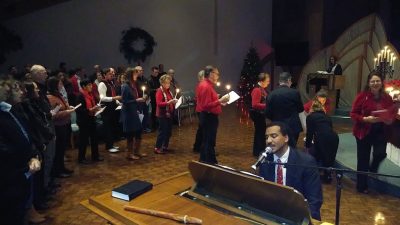
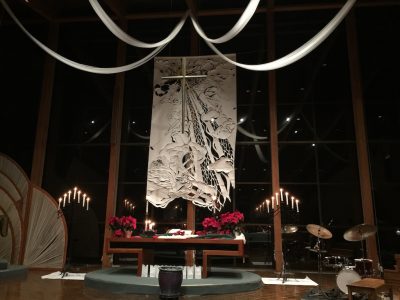
On Wednesday, at 4 pm and again at 7 pm, Ken Medema and I welcome you to join us for an interfaith service of healing, honoring the solstice, the longest night, a Blue Welcome to a place where you can be yourself, and feel however you really feel. Tonight we honor the healing power of experiencing & sharing our authentic experiences, in the context of prayers, songs, silence, sharing of stories, readings, in the context of safe community .
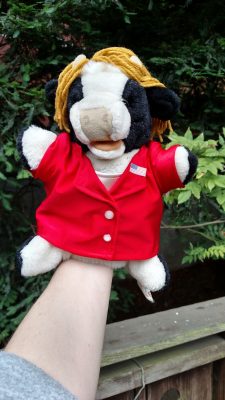
And of course, our upcoming services, this Sunday, featuring a child-friendly, fabulous puppet show about the Christmas story for children, created by David Guerra.
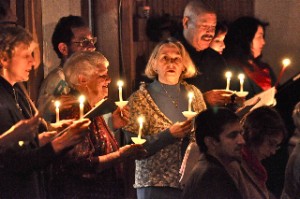
Finally, comes the timeless musical beauty of our Candlelight Christmas Eve Service, Dec 24 at 7 pm.
My deepest gratitude to everyone within our little community of faith, our staff members, our council, and service team leaders, and our many volunteers, who together make all of this possible.
Our best wishes to all of you who are traveling, and all who are far from home, and all of you who have moved. May you be filled with comfort and deep peace, through this season.
with love, Pastor Laurie

 The people walking in darkness have seen a great light; on those living in the land of deep darkness a light has dawned.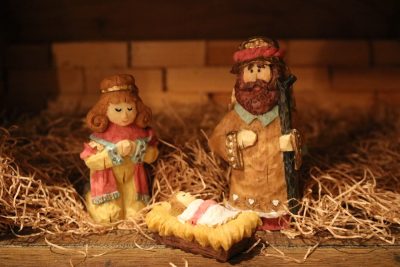
 In the midst of this advent season of waiting, I invite you to set aside the distractions of the busy-ness of this season to to take a moment of mindfulness. I invite you to realize the radical transformation that comes from setting aside preconceived ideas.
 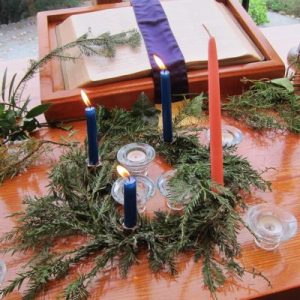 The words “breath,” “wind,” and “spirit” are used interchangeably to remind us that God is always coming to us. Become aware of your breath. Notice how breathing more deeply calms you. Notice how long you can hold your breath to remember how essential it is for your life. The Living God, or the God of Life, seeks to come to dwell within us and to give new life to us and through us.

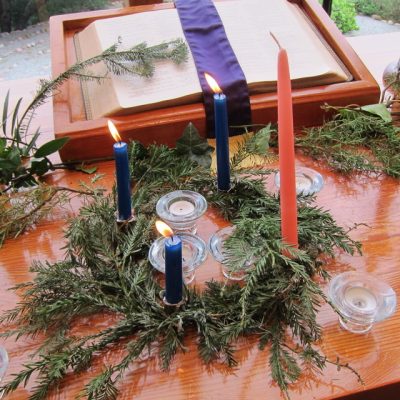 Sundays, Dec 1, 8, 15, 11:30 AM to 12:15 PM, after service and fellowship, in the sanctuary